Buy autoptp.eu ?
We are moving the project
autoptp.eu .
Are you interested in purchasing the domain
autoptp.eu ?
domain@kv-gmbh.de · 0541-91531010
Buy autoptp.eu ?
What is an isometry with non-orthogonal corners?
An isometry with non-orthogonal corners is a transformation that preserves distances and angles, but the corners of the shape are not at right angles to each other. This means that the shape is still congruent to its original form after the transformation, but the angles at the corners are not 90 degrees. Isometries with non-orthogonal corners can include rotations, reflections, translations, and glide reflections. These transformations are important in geometry and can be used to study the properties of shapes and figures. **
What is an isometry with non-orthogonal vertices?
An isometry with non-orthogonal vertices is a transformation that preserves distances and angles between points, but the vertices are not at right angles to each other. This means that the shape is still congruent to its original form, but the angles between the edges are not necessarily 90 degrees. Isometries with non-orthogonal vertices can include translations, rotations, reflections, and glide reflections. These transformations are important in geometry and can help us understand the properties of shapes in different orientations. **


Similar search terms for Non-orthogonal
Top-Angebote
Products related to Non-orthogonal:
-
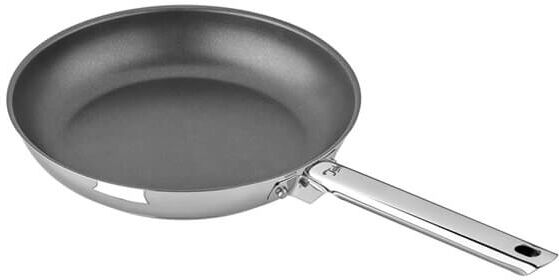
Tala Performance Superior 26cm Non-stick Frying PanMade in Portugal from superior grade 18/10 stainless steel, this Tala Performance Superior 26cm Non-Stick Frying Pan is suitable for use on all hob types including induction (it can also be used on an AGA). Tala cookware is also oven safe up to temperatures of 210°C and dishwasher safe. A deep, impact bonded induction base ensures even heat distribution for evenly cooked food. This 6mm deep base also retains heat well, so you can cook on a lower heat setting to save energy. The high quality mirror finish of this stainless steel frying pan is second to none. Stainless steel cookware is both durable and long lasting whilst being non-toxic and chemical free. It's also environmentally friendly and can be completely recycled when it comes to the end of its working life.This stainless steel frying pan features a stay cool handle and a 3 layer, ceramic reinforced Silampos non-stick coating which is BP and PFOA free. (H)8cm (W)28cm (D)48cm For your peace of mind this Tala Performance Superior 26cm Non-Stick Frying Pan is supplied with a 25 year manufacturer's guarantee.31,00 £*Shipping: 3,50 £Secure redirect to the provider
-
Uplifted Finds PetSnowy Smart Litter Box & Feeder Maintenance Accessories whiteKeep your automated pet appliances running at peak performance with the PetSnowy Smart Maintenance Accessories. This premium selection of genuine replacement supplies is specifically engineered to fit the exact mechanical compartments of your...144,97 $*Shipping: 0,00 $Secure redirect to the provider
-
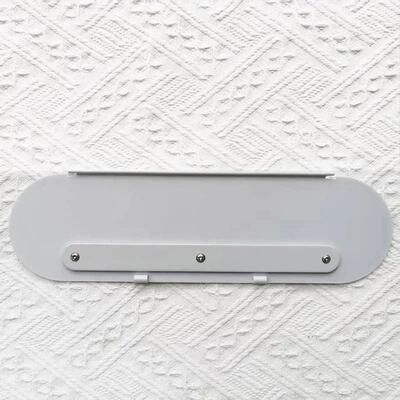
Uplift Essentials Smart Self Cleaning Litter Box Replacement Accessories & Maintenance Parts q clean doorKeep your automated pet care system running at peak performance with our specialized automatic litter box accessories collection. Maintaining a clean and hygienic environment for your cat is essential, and these precision components are designed to...65,97 $*Shipping: 0,00 $Secure redirect to the provider
-
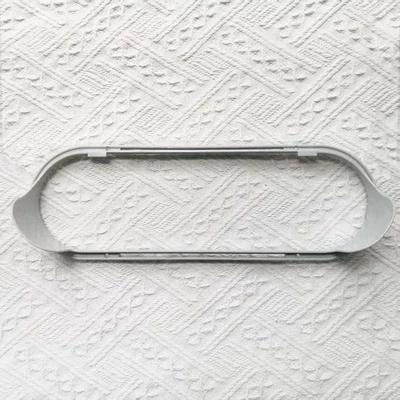
Uplift Essentials Smart Self Cleaning Litter Box Replacement Accessories & Maintenance Parts q clean frameKeep your automated pet care system running at peak performance with our specialized automatic litter box accessories collection. Maintaining a clean and hygienic environment for your cat is essential, and these precision components are designed to...64,97 $*Shipping: 0,00 $Secure redirect to the provider

-
What is an orthogonal vector?
An orthogonal vector is a vector that is perpendicular to another vector. In other words, two vectors are orthogonal if their dot product is zero. Geometrically, this means that the two vectors form a 90-degree angle with each other. Orthogonal vectors are important in many areas of mathematics and physics, including linear algebra and vector calculus. **
-
What does the term orthogonal mean?
The term orthogonal refers to two things being perpendicular or at right angles to each other. In mathematics, it often refers to vectors or matrices that are perpendicular to each other. In a broader sense, it can also refer to any two things that are independent or unrelated to each other. **
-
When are planes and lines orthogonal?
Planes and lines are orthogonal when the line is perpendicular to the plane. This means that the line forms a 90-degree angle with the plane, creating a right angle. In other words, the direction of the line is perpendicular to the direction of the plane. This relationship is important in geometry and engineering, as it affects the intersection and orientation of different geometric elements. **
-
Are linearly independent vectors always orthogonal?
No, linearly independent vectors are not always orthogonal. Linear independence means that no vector in the set can be written as a linear combination of the others, while orthogonality means that the vectors are perpendicular to each other. It is possible for linearly independent vectors to be orthogonal, but it is not a guarantee. For example, in three-dimensional space, the vectors (1, 0, 0), (0, 1, 0), and (0, 0, 1) are linearly independent and orthogonal, but the vectors (1, 1, 0) and (0, 1, 1) are linearly independent but not orthogonal. **
How do you determine the orthogonal complement?
To determine the orthogonal complement of a subspace, you first need to find a basis for the subspace. Then, you can use the Gram-Schmidt process to find an orthogonal basis for the subspace. Finally, the orthogonal complement is the set of all vectors in the vector space that are orthogonal to every vector in the basis of the subspace. **
What is a proof of two orthogonal?
Two vectors are considered orthogonal if their dot product is equal to zero. This means that the angle between the two vectors is 90 degrees, forming a right angle. Mathematically, if vectors u and v are orthogonal, then u · v = 0. This property can be used to prove that two vectors are orthogonal by calculating their dot product and showing that it equals zero. **
Top-Angebote
Products related to Non-orthogonal:
-
Uplift Essentials Smart Self Cleaning Litter Box Replacement Accessories & Maintenance Parts q clean filterKeep your automated pet care system running at peak performance with our specialized automatic litter box accessories collection. Maintaining a clean and hygienic environment for your cat is essential, and these precision components are designed to...67,97 $*Shipping: 0,00 $Secure redirect to the provider
-
Tala Performance Superior 26cm Non-stick Frying PanMade in Portugal from superior grade 18/10 stainless steel, this Tala Performance Superior 26cm Non-Stick Frying Pan is suitable for use on all hob types including induction (it can also be used on an AGA). Tala cookware is also oven safe up to temperatures of 210°C and dishwasher safe. A deep, impact bonded induction base ensures even heat distribution for evenly cooked food. This 6mm deep base also retains heat well, so you can cook on a lower heat setting to save energy. The high quality mirror finish of this stainless steel frying pan is second to none. Stainless steel cookware is both durable and long lasting whilst being non-toxic and chemical free. It's also environmentally friendly and can be completely recycled when it comes to the end of its working life.This stainless steel frying pan features a stay cool handle and a 3 layer, ceramic reinforced Silampos non-stick coating which is BP and PFOA free. (H)8cm (W)28cm (D)48cm For your peace of mind this Tala Performance Superior 26cm Non-Stick Frying Pan is supplied with a 25 year manufacturer's guarantee.31,00 £*Shipping: 3,50 £Secure redirect to the provider
-
Uplifted Finds PetSnowy Smart Litter Box & Feeder Maintenance Accessories whiteKeep your automated pet appliances running at peak performance with the PetSnowy Smart Maintenance Accessories. This premium selection of genuine replacement supplies is specifically engineered to fit the exact mechanical compartments of your...144,97 $*Shipping: 0,00 $Secure redirect to the provider
-
What is an isometry with non-orthogonal corners?
An isometry with non-orthogonal corners is a transformation that preserves distances and angles, but the corners of the shape are not at right angles to each other. This means that the shape is still congruent to its original form after the transformation, but the angles at the corners are not 90 degrees. Isometries with non-orthogonal corners can include rotations, reflections, translations, and glide reflections. These transformations are important in geometry and can be used to study the properties of shapes and figures. **
-
What is an isometry with non-orthogonal vertices?
An isometry with non-orthogonal vertices is a transformation that preserves distances and angles between points, but the vertices are not at right angles to each other. This means that the shape is still congruent to its original form, but the angles between the edges are not necessarily 90 degrees. Isometries with non-orthogonal vertices can include translations, rotations, reflections, and glide reflections. These transformations are important in geometry and can help us understand the properties of shapes in different orientations. **
-
What is an orthogonal vector?
An orthogonal vector is a vector that is perpendicular to another vector. In other words, two vectors are orthogonal if their dot product is zero. Geometrically, this means that the two vectors form a 90-degree angle with each other. Orthogonal vectors are important in many areas of mathematics and physics, including linear algebra and vector calculus. **
-
What does the term orthogonal mean?
The term orthogonal refers to two things being perpendicular or at right angles to each other. In mathematics, it often refers to vectors or matrices that are perpendicular to each other. In a broader sense, it can also refer to any two things that are independent or unrelated to each other. **
Similar search terms for Non-orthogonal
-
Uplift Essentials Smart Self Cleaning Litter Box Replacement Accessories & Maintenance Parts q clean doorKeep your automated pet care system running at peak performance with our specialized automatic litter box accessories collection. Maintaining a clean and hygienic environment for your cat is essential, and these precision components are designed to...65,97 $*Shipping: 0,00 $Secure redirect to the provider
-
Uplift Essentials Smart Self Cleaning Litter Box Replacement Accessories & Maintenance Parts q clean frameKeep your automated pet care system running at peak performance with our specialized automatic litter box accessories collection. Maintaining a clean and hygienic environment for your cat is essential, and these precision components are designed to...64,97 $*Shipping: 0,00 $Secure redirect to the provider
-
Uplift Essentials Smart Self Cleaning Litter Box Replacement Accessories & Maintenance Parts q clean matKeep your automated pet care system running at peak performance with our specialized automatic litter box accessories collection. Maintaining a clean and hygienic environment for your cat is essential, and these precision components are designed to...86,97 $*Shipping: 0,00 $Secure redirect to the provider
-
Uplift Essentials Smart Self Cleaning Litter Box Replacement Accessories & Maintenance Parts q clean circleKeep your automated pet care system running at peak performance with our specialized automatic litter box accessories collection. Maintaining a clean and hygienic environment for your cat is essential, and these precision components are designed to...64,97 $*Shipping: 0,00 $Secure redirect to the provider
-
When are planes and lines orthogonal?
Planes and lines are orthogonal when the line is perpendicular to the plane. This means that the line forms a 90-degree angle with the plane, creating a right angle. In other words, the direction of the line is perpendicular to the direction of the plane. This relationship is important in geometry and engineering, as it affects the intersection and orientation of different geometric elements. **
-
Are linearly independent vectors always orthogonal?
No, linearly independent vectors are not always orthogonal. Linear independence means that no vector in the set can be written as a linear combination of the others, while orthogonality means that the vectors are perpendicular to each other. It is possible for linearly independent vectors to be orthogonal, but it is not a guarantee. For example, in three-dimensional space, the vectors (1, 0, 0), (0, 1, 0), and (0, 0, 1) are linearly independent and orthogonal, but the vectors (1, 1, 0) and (0, 1, 1) are linearly independent but not orthogonal. **
-
How do you determine the orthogonal complement?
To determine the orthogonal complement of a subspace, you first need to find a basis for the subspace. Then, you can use the Gram-Schmidt process to find an orthogonal basis for the subspace. Finally, the orthogonal complement is the set of all vectors in the vector space that are orthogonal to every vector in the basis of the subspace. **
-
What is a proof of two orthogonal?
Two vectors are considered orthogonal if their dot product is equal to zero. This means that the angle between the two vectors is 90 degrees, forming a right angle. Mathematically, if vectors u and v are orthogonal, then u · v = 0. This property can be used to prove that two vectors are orthogonal by calculating their dot product and showing that it equals zero. **
* All prices are inclusive of VAT and, if applicable, plus shipping costs. The offer information is based on the details provided by the respective shop and is updated through automated processes. Real-time updates do not occur, so deviations can occur in individual cases. ** Note: Parts of this content were created by AI.