Buy autoptp.eu ?
We are moving the project
autoptp.eu .
Are you interested in purchasing the domain
autoptp.eu ?
domain@kv-gmbh.de · 0541-91531010
Buy autoptp.eu ?
Which PCI port does my PC have?
To determine which PCI port your PC has, you can open the device manager on your computer and look under the "System Devices" category. You should see a list of PCI ports, including PCI Express and PCI slots. Alternatively, you can check the specifications of your motherboard or consult the user manual to find out which PCI ports are available on your PC. Keep in mind that the specific type and number of PCI ports can vary depending on the make and model of your computer. **
What is the COM port still used for today?
The COM port is still used today for connecting legacy devices such as serial printers, barcode scanners, and industrial control systems to computers. It is also commonly used in embedded systems and microcontroller programming for debugging and communication with external devices. Additionally, some specialized equipment and machinery still rely on COM ports for data transfer and control. **


Similar search terms for StarTech-com-2-Port-PCI
Top-Angebote
Products related to StarTech-com-2-Port-PCI:
-
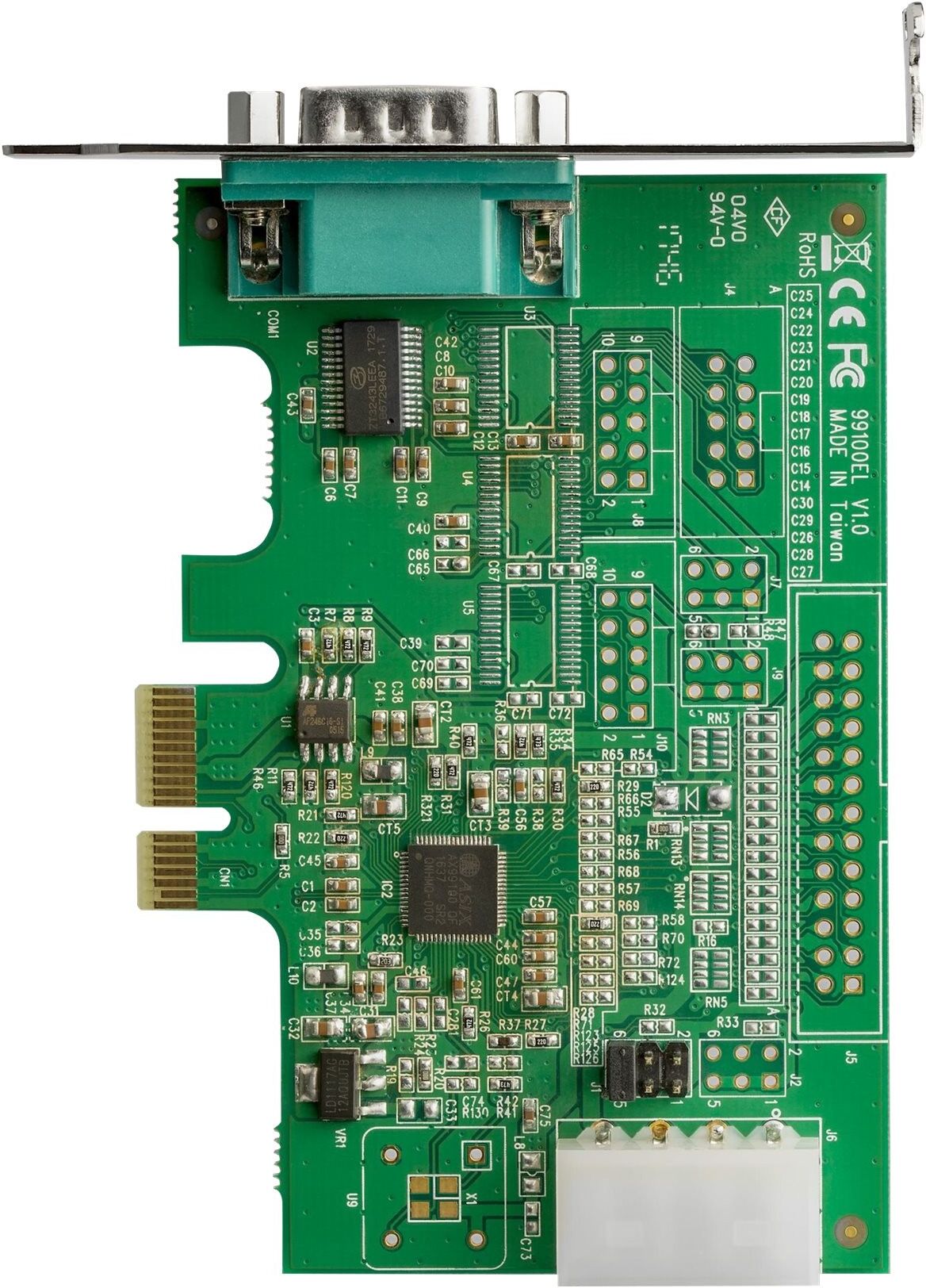
StarTech.com PEX1S953LP 1-Port PCI Express RS232 Serial Adapter Card - 16950 UART, Low ProfileStarTech.com 1-port PCI Express RS232 Serial Adapter Card, PCIe RS232 Serial Host Controller Card, PCIe to Serial DB9 COM Port, 16950 UART, Low Profile Expansion Card, Windows/macOS/Linux - Full/Low-Profile (PEX1S953LP) - Serial adapter - PCI Express x1 low profile - RS-232 x 152,99 £*Shipping: 0,00 £Secure redirect to the provider
-
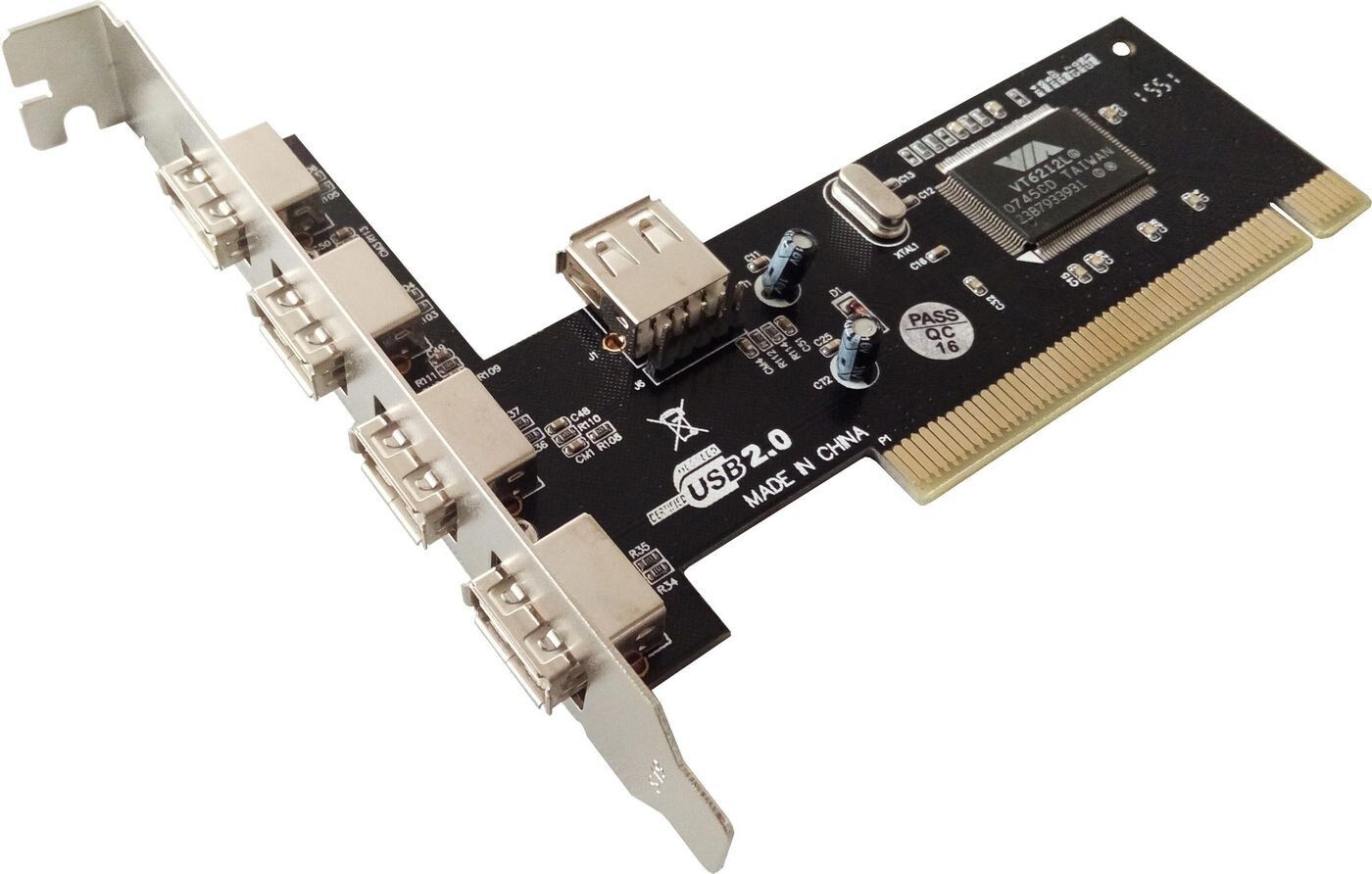
Microconnect MC-USB-NEC2.0 PCI USB 2.0 Expansion Card 4 External + 1 Internal PortAn internal PCI expansion card that adds five USB 2.0 Type-A ports to a desktop PC: four on the rear bracket and one internal. Based on the NEC uPD720101 controller, it supports data rates up to 480 Mbit/s and is backwards compatible with USB 1.1 devices. Works with Windows, Linux and Mac without an external hub.29,49 £*Shipping: 0,00 £Secure redirect to the provider
-
Gigabyte Gen3 2500E SSD 500GB M.2 PCI Express 3.0 NVMeA worthy choice for your PC upgradeGIGABYTE Gen3 2500E SSD adopts Phison’s controller and high-quality 3D NAND, delivers up to 2300 MB/s sequential read and 1500 MB/s sequential write performance. By utilizing Host Memory Buffer technology, the SSD controller can access the host DRAM without performance loss. Furthermore, GIGABYTE Gen3 2500E SSD features TRIM, SMART, and Over-Provision support to secure your data and perform stably.Breaking the Barriers of SATA Limitations (500GB)Outstanding performanceGIGABYTE Gen3 2500E SSD provides performance for your daily computing tasks, boast of best controller & 3D NAND flash.Sequential read speeds up to 2300 MB/sSequential write speeds up to 1500 MB/sGIGABYTE Gen3 2500E SSD gives you faster data transferring experience compared to 2.5" SATA solid state drive.Host Memory Buffer (HMB)The Host Memory Buffer (HMB) feature utilizes the DMA (Direct Memory Access) of PCI Express to allow SSDs to use some of the DRAM on PC system, instead of requiring the SSD to bring its own DRAM.Power Saving While OperatingComparing with regular PCIe 3.0 x4 SSD, GIGABYTE Gen3 2500E SSD reduces about 30% power while operating. Power consumption of the GIGABYTE Gen3 2500E SSD is notably improved.SSD Tool BoxThe newly updated SSD Tool Box is a software that gives users an overview of the SSD Status and various aspects such as model name, FW version, health condition and sensor temperature. Moreover, users can clear all the data with the Secure Erase function. You can download the SSD Tool Box from the link.124,49 £*Shipping: 0,00 £Secure redirect to the provider


-
How do I set up a COM port in VirtualBox?
To set up a COM port in VirtualBox, first ensure that the virtual machine is powered off. Then, open the settings for the virtual machine and navigate to the "Ports" section. Here, you can select "Enable Serial Port" and choose the port mode (Host Pipe, Host Device, or Named Pipe). Once the port mode is selected, you can configure the port settings such as the port number and other parameters. After making the necessary configurations, you can start the virtual machine and the COM port should be available for use. **
-
Why is the PCI-E USB port not working?
The PCI-E USB port may not be working due to a variety of reasons. It could be a hardware issue such as a faulty connection or a damaged port. It could also be a driver issue where the necessary drivers for the port are not installed or are outdated. Additionally, there could be a compatibility issue with the device being connected to the port. Troubleshooting steps such as checking the physical connection, updating drivers, and testing with different devices can help identify and resolve the issue. **
-
Can I use the COM port instead of the USB port for my WLAN card?
No, you cannot use the COM port for a WLAN card. WLAN cards are designed to be connected to a USB port or a PCIe slot on your computer. The COM port is typically used for serial communication with devices such as modems, mice, and keyboards. It does not provide the necessary interface for a WLAN card to function properly. **
-
How do you activate DTR and RTS on the COM port?
To activate Data Terminal Ready (DTR) and Request to Send (RTS) on a COM port, you can use programming languages like C# or Python to control these signals. In C#, you can use the SerialPort class to set the DtrEnable and RtsEnable properties to true. In Python, you can use the pySerial library to set the DTR and RTS signals using the setDTR and setRTS functions. By setting these properties or functions to true, you can activate DTR and RTS on the COM port. **


Can you install a PCI 3.0 M.2 SSD in a PCI 4.0 M.2 slot?
Yes, you can install a PCI 3.0 M.2 SSD in a PCI 4.0 M.2 slot. The M.2 slot is designed to be backward compatible, so a PCI 3.0 SSD will physically fit and function in a PCI 4.0 slot. However, the SSD will only operate at the maximum speed supported by the slot it is installed in, so a PCI 3.0 SSD will not be able to take advantage of the higher speeds offered by a PCI 4.0 slot. **
How can I expand PCI Express 2?
You can expand PCI Express 2 by adding a PCIe 2.0 expansion card to your existing system. These expansion cards come in various forms, such as PCIe switches, bridges, and extenders, and allow you to add more PCIe slots to your system. Additionally, you can also consider upgrading to a motherboard that supports more PCIe lanes, which will allow you to connect more devices and expand your system's capabilities. Finally, you can also consider using external PCIe expansion chassis to add more PCIe slots to your system. **
Top-Angebote
Products related to StarTech-com-2-Port-PCI:
-
StarTech.com 2-Port PCI Express RS232 Serial Adapter Card - PCIe to DB9, 16950 UART, Low Profile (PEX2S953LP)StarTech.com PEX2S953LP 2-port PCI Express RS232 serial host controller card. Adds two DB9 RS232 serial ports to a desktop or server through a PCIe slot, using a 16950 UART. Low-profile card, Windows and Linux compatible.86,49 £*Shipping: 0,00 £Secure redirect to the provider
-
StarTech.com 2 Port PCI Express (PCIe) SuperSpeed USB 3.0 Card Adapter with UASP - LP4 Power - Dual Port USB 3 PCIe Controller (PEXUSB3S25) - USB adapStarTech.com 2 Port PCI Express (PCIe) SuperSpeed USB 3.0 Card Adapter with UASP - LP4 Power - Dual Port USB 3 PCIe Controller (PEXUSB3S25) - USB adapter - PCI Express x1 - USB 3.0 x 2 - for P/N: CFASTRWU3, S251SMU33EP, ST103008U2C, ST53004U1C, ST7300U3M, ST93007U2C, UNI251BMU3338,49 £*Shipping: 0,00 £Secure redirect to the provider
-
StarTech.com PEX1S953LP 1-Port PCI Express RS232 Serial Adapter Card - 16950 UART, Low ProfileStarTech.com 1-port PCI Express RS232 Serial Adapter Card, PCIe RS232 Serial Host Controller Card, PCIe to Serial DB9 COM Port, 16950 UART, Low Profile Expansion Card, Windows/macOS/Linux - Full/Low-Profile (PEX1S953LP) - Serial adapter - PCI Express x1 low profile - RS-232 x 152,99 £*Shipping: 0,00 £Secure redirect to the provider
-
Microconnect MC-USB-NEC2.0 PCI USB 2.0 Expansion Card 4 External + 1 Internal PortAn internal PCI expansion card that adds five USB 2.0 Type-A ports to a desktop PC: four on the rear bracket and one internal. Based on the NEC uPD720101 controller, it supports data rates up to 480 Mbit/s and is backwards compatible with USB 1.1 devices. Works with Windows, Linux and Mac without an external hub.29,49 £*Shipping: 0,00 £Secure redirect to the provider
-
Which PCI port does my PC have?
To determine which PCI port your PC has, you can open the device manager on your computer and look under the "System Devices" category. You should see a list of PCI ports, including PCI Express and PCI slots. Alternatively, you can check the specifications of your motherboard or consult the user manual to find out which PCI ports are available on your PC. Keep in mind that the specific type and number of PCI ports can vary depending on the make and model of your computer. **
-
What is the COM port still used for today?
The COM port is still used today for connecting legacy devices such as serial printers, barcode scanners, and industrial control systems to computers. It is also commonly used in embedded systems and microcontroller programming for debugging and communication with external devices. Additionally, some specialized equipment and machinery still rely on COM ports for data transfer and control. **
-
How do I set up a COM port in VirtualBox?
To set up a COM port in VirtualBox, first ensure that the virtual machine is powered off. Then, open the settings for the virtual machine and navigate to the "Ports" section. Here, you can select "Enable Serial Port" and choose the port mode (Host Pipe, Host Device, or Named Pipe). Once the port mode is selected, you can configure the port settings such as the port number and other parameters. After making the necessary configurations, you can start the virtual machine and the COM port should be available for use. **
-
Why is the PCI-E USB port not working?
The PCI-E USB port may not be working due to a variety of reasons. It could be a hardware issue such as a faulty connection or a damaged port. It could also be a driver issue where the necessary drivers for the port are not installed or are outdated. Additionally, there could be a compatibility issue with the device being connected to the port. Troubleshooting steps such as checking the physical connection, updating drivers, and testing with different devices can help identify and resolve the issue. **
Similar search terms for StarTech-com-2-Port-PCI
-
Gigabyte Gen3 2500E SSD 500GB M.2 PCI Express 3.0 NVMeA worthy choice for your PC upgradeGIGABYTE Gen3 2500E SSD adopts Phison’s controller and high-quality 3D NAND, delivers up to 2300 MB/s sequential read and 1500 MB/s sequential write performance. By utilizing Host Memory Buffer technology, the SSD controller can access the host DRAM without performance loss. Furthermore, GIGABYTE Gen3 2500E SSD features TRIM, SMART, and Over-Provision support to secure your data and perform stably.Breaking the Barriers of SATA Limitations (500GB)Outstanding performanceGIGABYTE Gen3 2500E SSD provides performance for your daily computing tasks, boast of best controller & 3D NAND flash.Sequential read speeds up to 2300 MB/sSequential write speeds up to 1500 MB/sGIGABYTE Gen3 2500E SSD gives you faster data transferring experience compared to 2.5" SATA solid state drive.Host Memory Buffer (HMB)The Host Memory Buffer (HMB) feature utilizes the DMA (Direct Memory Access) of PCI Express to allow SSDs to use some of the DRAM on PC system, instead of requiring the SSD to bring its own DRAM.Power Saving While OperatingComparing with regular PCIe 3.0 x4 SSD, GIGABYTE Gen3 2500E SSD reduces about 30% power while operating. Power consumption of the GIGABYTE Gen3 2500E SSD is notably improved.SSD Tool BoxThe newly updated SSD Tool Box is a software that gives users an overview of the SSD Status and various aspects such as model name, FW version, health condition and sensor temperature. Moreover, users can clear all the data with the Secure Erase function. You can download the SSD Tool Box from the link.124,49 £*Shipping: 0,00 £Secure redirect to the provider
-
Intenso M.2 SSD PCIe Premium 250 GB PCI Express 3.0 NVMeBoost your computers performanceThe internal Intenso M.2 SSD PCIe Premium offers first class performance for a wide range of applications, from everyday applications to graphic / design usages and gaming. Equipped with a PCIe interface according to Gen3 standard and 4 lanes (PCIe Gen3 x4) and NVMe 1.3 technology, read speeds of up to 2.100 MB/s and write speeds of up to 1.700 MB/s are reached, over 3 to 4x the speed of SATA-based SSDs. The performance of your computer improves immensely, the system can be booted up in seconds and even demanding applications can be operated without any problems. Thanks to the M.2 2280 form factor, the PCIe SSD can be easily installed in desktops, slim notebooks and laptops or more compact devices such as ultrabooks. The PCIe SSD Premium from Intenso is available in the capacities 250GB, 500GB and 1TB and thus offers space for countless photos, videos, important documents, applications and much more.66,49 £*Shipping: 0,00 £Secure redirect to the provider
-
ADATA LEGEND 860 500GB M.2 2280 NVMe PCI Express 4.0 SSDThe ADATA LEGEND 860 500GB is an M.2 2280 internal solid state drive using a PCIe Gen4 x4 NVMe interface and 3D NAND flash. ADATA rates it at sequential read speeds of up to 5,000MB/s and sequential write speeds of up to 3,000MB/s, for quicker boot times, application loading and large file transfers. It fits desktop PCs and laptops with a PCIe Gen4 M.2 2280 slot and can also be used as PS5 storage expansion when fitted with suitable cooling. Endurance is rated at 160TB written (TBW) with an MTBF of 2,000,000 hours, and the drive is covered by ADATA's 5-year limited warranty.105,99 £*Shipping: 0,00 £Secure redirect to the provider
-
Can I use the COM port instead of the USB port for my WLAN card?
No, you cannot use the COM port for a WLAN card. WLAN cards are designed to be connected to a USB port or a PCIe slot on your computer. The COM port is typically used for serial communication with devices such as modems, mice, and keyboards. It does not provide the necessary interface for a WLAN card to function properly. **
-
How do you activate DTR and RTS on the COM port?
To activate Data Terminal Ready (DTR) and Request to Send (RTS) on a COM port, you can use programming languages like C# or Python to control these signals. In C#, you can use the SerialPort class to set the DtrEnable and RtsEnable properties to true. In Python, you can use the pySerial library to set the DTR and RTS signals using the setDTR and setRTS functions. By setting these properties or functions to true, you can activate DTR and RTS on the COM port. **
-
Can you install a PCI 3.0 M.2 SSD in a PCI 4.0 M.2 slot?
Yes, you can install a PCI 3.0 M.2 SSD in a PCI 4.0 M.2 slot. The M.2 slot is designed to be backward compatible, so a PCI 3.0 SSD will physically fit and function in a PCI 4.0 slot. However, the SSD will only operate at the maximum speed supported by the slot it is installed in, so a PCI 3.0 SSD will not be able to take advantage of the higher speeds offered by a PCI 4.0 slot. **
-
How can I expand PCI Express 2?
You can expand PCI Express 2 by adding a PCIe 2.0 expansion card to your existing system. These expansion cards come in various forms, such as PCIe switches, bridges, and extenders, and allow you to add more PCIe slots to your system. Additionally, you can also consider upgrading to a motherboard that supports more PCIe lanes, which will allow you to connect more devices and expand your system's capabilities. Finally, you can also consider using external PCIe expansion chassis to add more PCIe slots to your system. **
* All prices are inclusive of VAT and, if applicable, plus shipping costs. The offer information is based on the details provided by the respective shop and is updated through automated processes. Real-time updates do not occur, so deviations can occur in individual cases. ** Note: Parts of this content were created by AI.